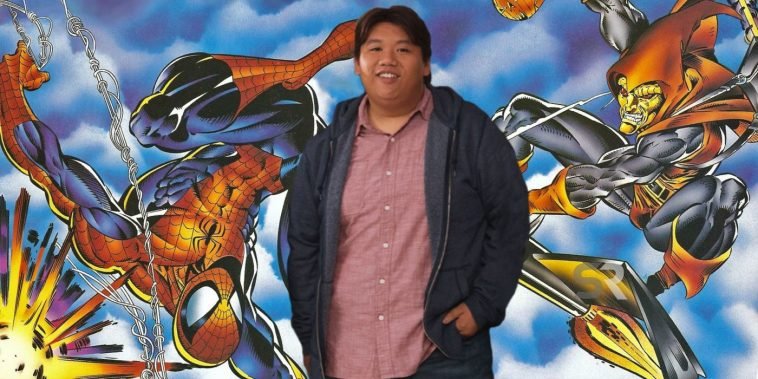
The friendly neighborhood Spider-Man has faced no shortage of iconic villains in the MCU, from the Vulture's grounded menace to Mysterio's grand illusions, and the multiversal madness of the Green Goblin. But as the dust settles from Spider-Man: No Way Home, a persistent, intriguing, and somewhat heartbreaking theory has gripped fans: could Peter Parker's best friend, Ned Leeds, be on a collision course with villainy as the Hobgoblin? It's a question rooted deeply in comic lore and subtly teased within the films, promising a deeply personal and tragic turn for the web-slinger's next chapter.
At a Glance: What You Need to Know About Ned and the Hobgoblin
- MCU Ned is Unique: While inspired by comics, Jacob Batalon's Ned Leeds is primarily Peter Parker's loyal "guy in the chair," differing significantly from his comic book counterpart who was a Daily Bugle reporter.
- The No Way Home Tease: A pivotal scene saw Ned promise not to betray or kill Peter, a direct nod to comic history and a chilling moment for fans. His yellow-and-green attire added to the ominous foreshadowing.
- Actor Confirmed Discussions: Jacob Batalon himself has acknowledged conversations about Ned's potential villainous path, though his return in Spider-Man 4 remains uncertain.
- Hobgoblin: A Mantle, Not Just a Man: In the comics, "Hobgoblin" is a title held by several characters, often manipulated by others. This offers the MCU flexibility for who takes up the glider and pumpkin bombs.
- Green Goblin's Shadow: Every Hobgoblin in the comics is tied to Norman Osborn's Green Goblin legacy and gear. The MCU would need a creative way to introduce this gear, given No Way Home's implications.
- Other Contenders Exist: While Ned is a prime candidate, characters like BB Urich (Daredevil: Born Again) could also be manipulated into becoming a Hobgoblin, aligning with comic character Phillip Urich.
- It's About Manipulation: The theory isn't necessarily about Ned choosing evil, but about him being manipulated through magic, technology, or mind control, leveraging his established affinity for magic.
The Hobgoblin's Allure: Why the MCU Needs a New Goblin
The Marvel Cinematic Universe has always excelled at adapting classic characters while putting its own unique spin on them. With Spider-Man's rogues' gallery, we've seen a gradual escalation. Spider-Man: Homecoming introduced grounded, street-level threats like Vulture, Shocker, Scorpion, Prowler, and Tinkerer. Spider-Man: Far From Home took things up a notch with Mysterio's global illusions and the Elementals (though fake). Then, Spider-Man: No Way Home brought the multiversal big guns: Willem Dafoe's Green Goblin, Alfred Molina's Doctor Octopus, Jamie Foxx's Electro, Thomas Haden Church's Sandman, and Rhys Ifans' Lizard.
Crucially, No Way Home also suggested that Norman Osborn doesn't exist in the MCU's main Earth-616 timeline. This neatly sidesteps the possibility of a new Green Goblin variant emerging, leaving a villainous void that desperately craves a Goblin-like figure. Enter the Hobgoblin. This character offers the perfect solution: a sinister, glider-riding, pumpkin-bomb-wielding threat that carries the intimidating aesthetic of the Green Goblin without requiring another direct iteration of Norman Osborn. It's a way to evolve the Goblin legacy while creating a fresh antagonist for Peter Parker, one that could hit far closer to home than any before.
Ned Leeds' Shifting Sands: From Peter's Guy-in-the-Chair to Potential Threat
For three films, Ned Leeds has been Peter Parker's quintessential best friend. He was the enthusiastic "guy in the chair" in Spider-Man: Homecoming, the supportive travel buddy in Spider-Man: Far From Home, and the surprisingly adept magic-wielder in Spider-Man: No Way Home. His journey has been one of unwavering loyalty and comic relief, often providing a much-needed grounding for Peter's superheroics. If you're looking for a deeper dive into his character's past, you can find All about Ned from Spider-Man and his pivotal role in Peter's life.
However, No Way Home planted seeds of doubt and dread about Ned's future. During a poignant scene in the destroyed Sanctum Sanctorum, while wearing a curiously yellow-and-green sweater (colors often associated with Green Goblin and, by extension, Hobgoblin), Ned accidentally discovers his ability to create portals with Doctor Strange's sling ring. He then earnestly promises Tom Holland's Peter Parker that he would never betray or kill him, unlike how Ned's best friend (Tobey Maguire's Harry Osborn) betrayed him. This moment, designed to ease Peter's fears, instantly sent shivers down comic fans' spines.
Why? Because in the comics, the Ned Leeds we know and love is quite different. He's a Daily Bugle reporter who eventually marries Betty Brant. More importantly, he's brainwashed by the original Hobgoblin, Roderick Kingsley, into becoming the Hobgoblin himself, causing him to seemingly betray Spider-Man before his tragic death. The MCU's version of Ned has deviated significantly from this origin story, but the "best friend betrayal" dialogue in No Way Home was too specific, too on-the-nose, to be ignored. It felt less like a throwaway line and more like a carefully crafted piece of foreshadowing.
Adding fuel to the fire, actor Jacob Batalon has confirmed that discussions about this villainous path for Ned have taken place. While he remains uncertain about his character's return in Spider-Man 4 following the events of No Way Home (where Peter's memory wipe effectively erased him from Ned's life), the idea is clearly on the table at Marvel.
Furthermore, MCU Ned's unexpected affinity for magic, demonstrated by his ability to use the sling ring, provides a perfect vector for manipulation. Instead of industrial technology or a chemical formula, Ned's turn could be influenced by dark magic or mind control, exploiting his latent mystical abilities. This would offer a fresh take on the Hobgoblin's origin, fitting perfectly within the expanded mystical elements of the MCU.
The Hobgoblin Identity: A Legacy of Manipulation and Madness
One of the key reasons the Hobgoblin theory holds so much weight for Ned Leeds is the character's unique history in the comics. Unlike the singular identity of the Green Goblin (primarily Norman Osborn, then Harry Osborn), the mantle of Hobgoblin has been worn by multiple individuals. This creates a fascinating dynamic: Hobgoblin isn't just one person; it's a role, often bestowed or forced upon others.
The original and most significant Hobgoblin was Roderick Kingsley, a ruthless fashion designer and criminal mastermind who discovered one of Norman Osborn's abandoned Green Goblin lairs. He reverse-engineered Osborn's notes and equipment, creating a new, more terrifying persona to avoid being associated with the original Goblin's madness. Kingsley then strategically manipulated several individuals, including Ned Leeds, into becoming stand-ins or pawns, acting as decoys or fall guys.
Other notable Hobgoblins include:
- Ned Leeds: Brainwashed by Kingsley, he believed himself to be the Hobgoblin for a time, carrying out Kingsley's bidding before his tragic demise. This is the direct comic parallel that fuels the current MCU theory.
- Jason Macendale Jr.: A former mercenary who bought the Hobgoblin identity from Kingsley, later undergoing demonic possession to enhance his powers.
- Phillip Urich: The nephew of Daily Bugle reporter Ben Urich, he initially tried to be a heroic Green Goblin before succumbing to madness and eventually becoming a different, more powerful Hobgoblin, and later the Goblin King.
- Arnold "Lefty" Donovan, Daniel Kingsley, Claude: Other, lesser-known individuals who wore the mantle, often briefly and tragically.
This rich comic history means the MCU doesn't have to commit to a single individual from the start. They could introduce Roderick Kingsley as the puppet master, a cunning businessman or criminal who seeks to exploit the Green Goblin's legacy for his own gain. He could then manipulate Ned Leeds, BB Urich, or even a completely new character into becoming the armored, glider-riding menace. This approach provides a consistent, overarching antagonist (Kingsley) while allowing for the "Hobgoblin" identity to be passed around, keeping Peter Parker guessing and raising the emotional stakes with each new reveal. It offers a fresh roster of Goblin enemies without needing to bring back or reinvent Norman Osborn directly.
The Green Goblin's Ghost: Originating the Hobgoblin's Gear
Regardless of who wears the mask, every iteration of the Hobgoblin in the comics is intrinsically tied to Norman Osborn's Green Goblin legacy and his advanced gear. The glider, the pumpkin bombs, the goblin serum—these are the hallmarks. For an MCU Hobgoblin to feel authentic and genuinely threatening, they would need a similar origin for their arsenal, necessitating some form of Green Goblin inspiration. This presents a unique challenge for the MCU given the events of Spider-Man: No Way Home.
In No Way Home, Willem Dafoe's Norman Osborn, in his Green Goblin persona, famously leaves his broken mask in an alleyway after a confrontation with Peter. This image lingered, sparking immediate speculation: could this be the remnant an MCU Roderick Kingsley finds to kickstart his own Goblin operations? It's a compelling visual and a logical jump.
However, the film also strongly implied that all multiversal travelers, along with any objects they brought with them or created during their time on Earth-616, would be returned to their home universes when Doctor Strange's spell completed. This would mean Osborn's mask, glider, and bombs would have been whisked away with him. If the mask did remain, it would technically be a retcon or at least a convenient oversight in the established rules of the spell.
So, how could the MCU introduce Hobgoblin gear without another Norman Osborn? Here are a few possibilities:
- A "Left Behind" Anomaly: Perhaps a small fragment, a schematic, or a piece of the original Osborn tech was indeed left behind due to a magical glitch or conscious decision, allowing an MCU villain to reverse-engineer it.
- Wakandan Reverse-Engineering: Given the MCU's advanced technology, perhaps Wakanda or another highly advanced organization (like Damages Control, or a clandestine group) recovered some Green Goblin tech from the battle and, with disastrous results, attempted to replicate or study it.
- A New Source of Goblin Tech: The MCU could simply invent a new source for the gear, perhaps a separate, independent inventor or organization that developed similar technology to Osborn's, perhaps inspired by legends or leaked designs.
- Magical Equivalent: If Ned's turn is magic-based, the gear could also be magically constructed or imbued, creating a "magical glider" or "arcane bombs" that mimic the Goblin's arsenal without direct technological lineage. This aligns with Ned's recent mystical abilities.
The key is that the MCU needs a plausible, engaging narrative for how this Green Goblin-inspired weaponry comes into existence on Earth-616. Without it, the Hobgoblin risks feeling disconnected from the established lore.
Beyond Ned: Other Contenders for the Hobgoblin Mantle
While Ned Leeds is undeniably the fan-favorite candidate due to the direct comic parallels and No Way Home teases, the MCU has a history of subverting expectations and pulling from lesser-known comic arcs. The nature of the Hobgoblin mantle itself—often passed on or manipulated—opens the door for other potential candidates.
One intriguing possibility emerges from the upcoming Daredevil: Born Again series: the introduction of journalist BB Urich, niece of the iconic Ben Urich. In the comics, Ben Urich's nephew, Phillip Urich, becomes a notable Hobgoblin after being exposed to a variant of the Green Goblin formula. He later evolves into the formidable Goblin King.
How could BB Urich fit into the Hobgoblin theory?
- Journalistic Curiosity Gone Wrong: Like her uncle, BB Urich could be investigating a shadowy organization or a new street-level criminal enterprise, perhaps one tied to advanced technology or remnants of past villain activity. Her investigation could lead her to the Goblin gear or a manipulator like Roderick Kingsley.
- Manipulation by Kingsley: If Roderick Kingsley is introduced as the mastermind behind the Hobgoblin identity, he could target BB Urich. Her journalistic drive, proximity to criminal elements (through her work, potentially related to Kingpin's return), or even a personal vendetta could make her a susceptible pawn. Kingsley might offer her power or leverage to achieve her goals, only to twist her into his weapon.
- A Different Origin: The MCU could adapt Phil Urich's origin directly, having BB (or another Urich family member) stumble upon the Goblin formula or tech and be corrupted by it.
The inclusion of BB Urich offers a fantastic opportunity to tie the Hobgoblin into the street-level narratives of Daredevil: Born Again and potentially bridge the gap between that show and Spider-Man 4. It also provides a narrative alternative if the writers decide against turning Ned Leeds into a villain, or even allows for multiple Hobgoblins to emerge – one manipulated by magic (Ned), and another by technology/formula (BB Urich), all orchestrated by a central figure like Kingsley. This would echo the comics' tradition of multiple individuals holding the mantle, keeping Peter Parker guessing and giving him a wider array of challenges.
Spider-Man 4 and the Unwritten Future
Spider-Man 4 is officially in development, with Destin Daniel Cretton (known for Shang-Chi and the Legend of the Ten Rings) attached to direct. However, the script is still unfinished, leaving the door wide open for speculation about its plot and villains.
Current rumors swirl around a few possibilities:
- Kingpin's Return: With Vincent D'Onofrio's Kingpin firmly established in the MCU (Hawkeye, Echo, and Daredevil: Born Again), a street-level story featuring Wilson Fisk as a major antagonist for Spider-Man seems highly plausible. This would tie Spidey directly into the grittier side of the MCU.
- Knull and the Symbiotes: Another theory suggests a multiversal plot involving Knull, the Symbiote God. Given the post-credits scene of No Way Home (Venom's goo left behind) and the general trajectory of the MCU into cosmic threats, this is also a strong possibility.
Despite these other compelling rumors, the "Ned Leeds and the Hobgoblin Theory" remains a persistent and powerfully resonant possibility. The emotional weight of a best friend's betrayal, especially after No Way Home's memory wipe, offers a deeply personal conflict for Peter Parker. It's a narrative that could explore themes of identity, loss, and the tragic consequences of Peter's superhero life in a way that few other villains could.
The potential for Ned's manipulation (be it through magic, advanced technology, or mind control) aligns with established MCU precedents. Peter's world has been reset, his friends no longer know him. This vulnerability, combined with Ned's newfound magical affinity, could make him an easy target for a cunning villain like Roderick Kingsley, who seeks to exploit the power vacuum left by the Green Goblin's absence. Whether it's a slow burn towards corruption or a swift, tragic transformation, the theory promises a heart-wrenching twist that could define Spider-Man's next era.
Untangling the Threads: Your Hobgoblin Theory Questions Answered
The "Ned Leeds and the Hobgoblin Theory" generates a lot of discussion. Here are crisp answers to some common questions and misconceptions:
Is Ned Leeds definitely becoming Hobgoblin in the MCU?
No, not definitively. While Spider-Man: No Way Home included very strong foreshadowing (the yellow-and-green attire, the "best friend betrayal" line), and actor Jacob Batalon has confirmed discussions, Marvel has not officially announced this plotline. It remains a very strong and popular fan theory rooted in comic history.
How would Ned get the Goblin gear and abilities?
In the comics, Hobgoblin's gear is often derived from or inspired by the Green Goblin's technology. In the MCU, potential paths include:
- Remnants of Osborn's tech: A piece of Green Goblin's gear (like the mask briefly seen in No Way Home) could have been left behind or reverse-engineered by a new villain.
- New tech source: An MCU version of Roderick Kingsley could have independently developed similar tech.
- Magical means: Given Ned's newfound magical abilities, his Hobgoblin powers and gear could be magically constructed or imbued, providing a unique MCU twist.
- Manipulation/brainwashing: Like his comic counterpart, Ned could be manipulated or mind-controlled into using pre-existing gear by a puppet master.
Could someone else be Hobgoblin instead of Ned?
Absolutely. In the comics, "Hobgoblin" is a mantle held by multiple characters, often manipulated by an original mastermind (Roderick Kingsley). The MCU could introduce Kingsley, who then manipulates someone else, such as BB Urich (introduced in Daredevil: Born Again, who has a comic book counterpart, Phil Urich, who became Hobgoblin). This offers flexibility and keeps the audience guessing.
Why would Marvel turn a beloved character like Ned into a villain?
Turning a best friend into an antagonist creates incredibly high emotional stakes for the protagonist. For Peter Parker, who has lost so much, facing his former best friend as a villain would be a deeply personal and tragic conflict. It also provides a fresh, compelling narrative that leverages the audience's existing investment in Ned, making the betrayal sting even more. It's a classic comic trope designed for maximum dramatic impact.
What's the significance of Ned's affinity for magic in this theory?
Ned's surprising ability to use Doctor Strange's sling ring in No Way Home establishes him as someone with latent magical potential. This provides a new avenue for his potential turn: instead of a chemical formula or tech exposure, Ned could be manipulated through dark magic, mind control, or a corrupting magical artifact. This offers a unique origin for an MCU Hobgoblin, setting him apart from previous Goblin iterations.
The Enduring Power of a Best Friend's Betrayal
The "Ned Leeds and the Hobgoblin Theory" isn't just a fun piece of fan speculation; it's a narrative powerhouse. It taps into one of the most classic and heartbreaking tropes in storytelling: the best friend turned foe. For Peter Parker, whose entire life has been reset and stripped bare by the end of No Way Home, a betrayal from the person who was once his closest confidante would be the ultimate test of his resilience. It's a wound that wouldn't just heal with a punch, but one that would linger, challenging his ideals and forcing him to confront the painful cost of his life as Spider-Man.
Such a plotline offers profound dramatic potential for Spider-Man 4. It would force Peter to reckon with his past in a deeply personal way, even if his friends no longer remember him. It could explore themes of manipulation, the burden of identity, and the devastating impact of superheroics on personal relationships.
As Spider-Man 4 slowly takes shape, the persistent buzz around Ned Leeds becoming the Hobgoblin suggests that Marvel Studios has a goldmine of emotional storytelling waiting to be unearthed. Whether it's Ned, BB Urich, or another tragic figure, the Hobgoblin's arrival would signify a dark, complex, and emotionally charged new era for the web-slinger, reminding us that sometimes, the greatest threats come from the places we least expect—or from the people we once held closest.